
UC Berkeley Chemistry Tutoring
Chem 3A & Chem 3B
I've worked extensively with students in Chem 3A and Chem 3B under both Professors Marsden and Robak. While the courses cover much of the same material, the skills required to succeed can vary significantly depending on the instructor. My tutoring is tailored to the specific demands of each course.
One of the biggest challenges Berkeley students face is learning to identify the critical structural features that determine reactivity in complex, polyfunctional molecules. Exams often require students to apply familiar concepts to unfamiliar situations, such as predicting competing products for a given reaction, making mechanistic reasoning far more important than memorization alone.
Regardless of instructor, success in the Chem 3A/3B sequence requires consistent effort, as the material is highly cumulative and increases in difficulty throughout the semester. I'll help you develop an efficient study framework that helps you to stay ahead of the course from the very beginning.

Berkeley Students Tend to Benefit Most From Tutoring When…
You want to stay ahead of the course throughout the semester (This is especially important in Prof. Robak's section, where the material builds very systematically from week to week.)
You have a very busy schedule and want to maximize their efficiency when studying.
You can follow mechanisms and reactions when they are shown to you, but have difficulty going from the simpler problems shown in the Lecture Notes and PLWS to the exam style questions.
You feel like you're putting in the hours, but you're still struggling to recognize the key features that determine how a problem should be approached.
If any of these sound familiar, I'd be happy to discuss how we can build a study approach tailored to your specific section of Chem 3A / 3B.
What UC Berkeley Students Have Said About My Tutoring.
Sue J. P. (Prof. Marsden)
"After lectures, I often felt overwhelmed and completely lost, but Julian's sessions consistently brought clarity and confidence."
"Berkeley's chemistry curriculum is notoriously rigorous, but having Julian as a tutor was vital in helping me navigate the course and earn a final grade that I am proud of."
Tobias B. (Prof. Marsden)
"Julian’s questions closely matched the style and difficulty of the questions I saw in the actual course, so I always felt more confident going into tests."
“Leading up to the final, he sent me a lot of mechanism practice problems that were incredibly helpful”
"He understands how the course is taught, what professors are looking for, and how to prepare students effectively."

Understanding the Differences Between Professors Marsden and Robak
While Chem 3A and Chem 3B cover much of the same material regardless of instructor, the skills rewarded on each course can differ significantly.
Professor Robak takes a highly structured approach to the course. Students who stay on top of the material and consistently master each topic as it is introduced often do very well. Because the material builds systematically throughout the semester, falling behind can make the course substantially more difficult.
Students may prefer Professor Robak if they:
• Have a manageable overall course load
• Are comfortable consistently engaging with the material throughout the semester
• Enjoy a highly structured learning environment
• Are interested in developing a deeper understanding of concepts relevant to biomedical sciences
Professor Marsden takes a more mechanism-focused approach. His courses often reward students who can apply core principles creatively to unfamiliar problems and who can develop an effective approach to breaking down complex transformations by using the mechanistic ideas covered in the class.
Students may prefer Professor Marsden if they:
• Are balancing Chem 3A/3B with several other demanding courses
• Enjoy a more flexible course structure
• Like solving open-ended mechanism problems
• Prefer learning through pattern recognition and mechanistic reasoning
Annotated Exam Questions
How do the two instructors test students differently?
While both courses cover much of the same material, the style of reasoning rewarded on exams can be quite different. The examples below illustrate the type of thinking that students are often asked to demonstrate.
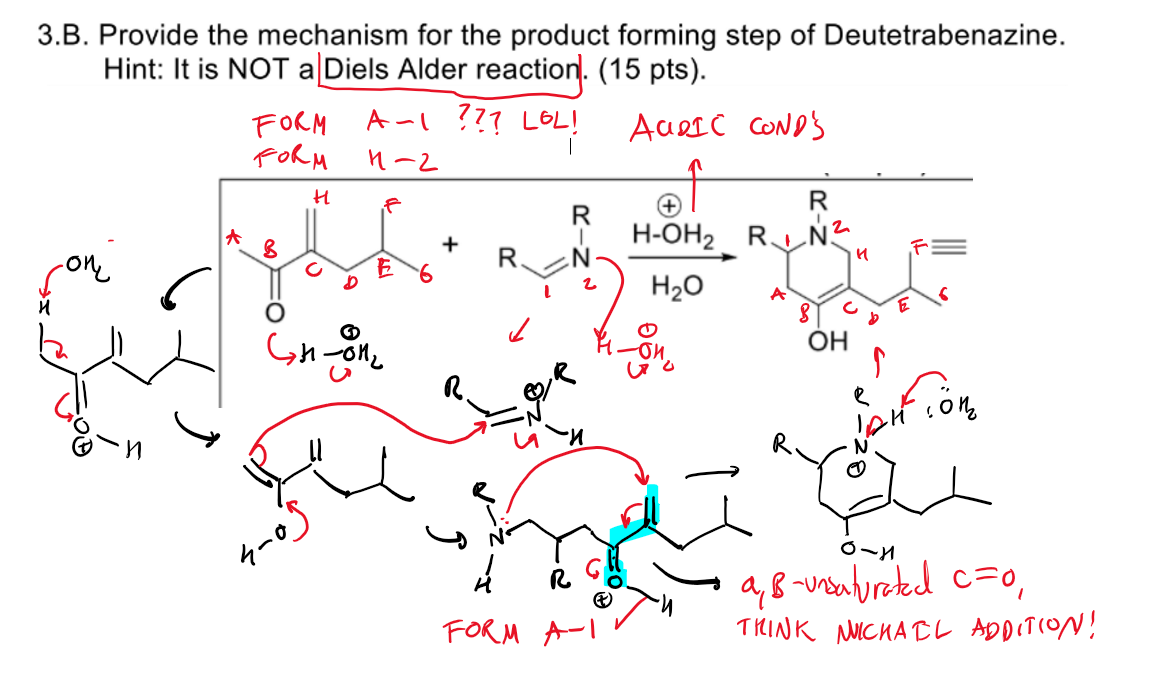
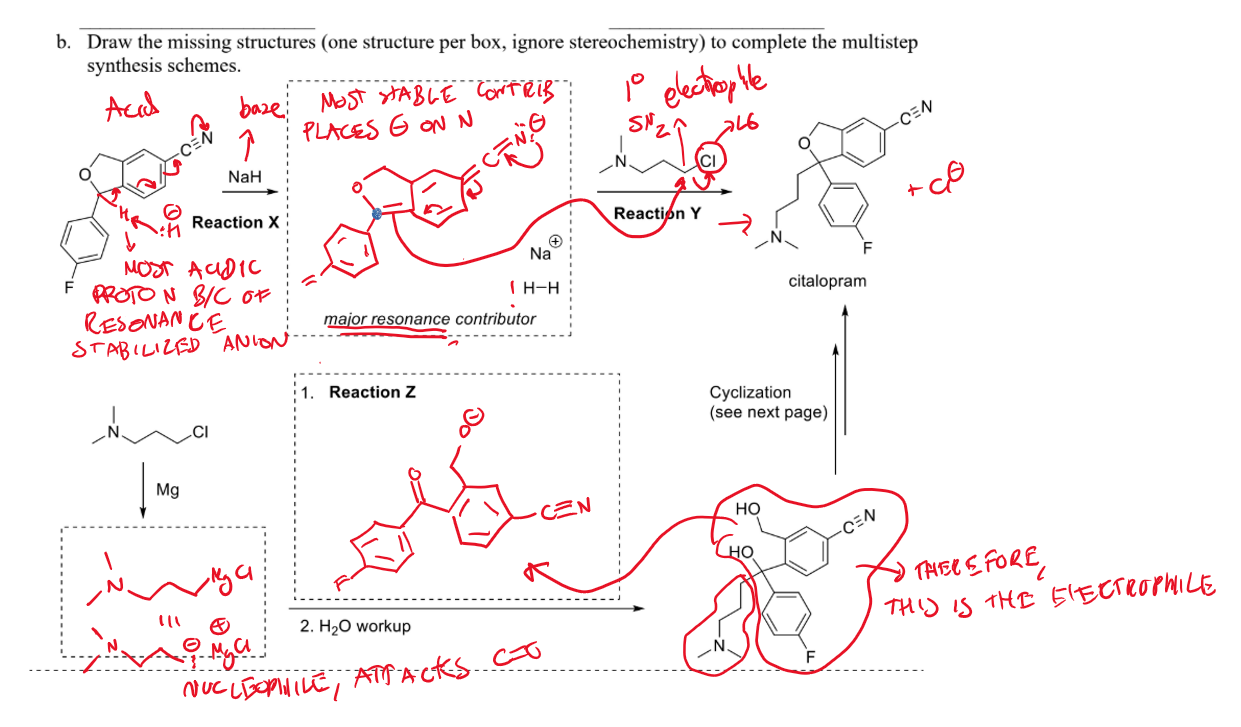
Professor Marsden: Applying Mechanistic Principles to Unfamiliar Problems
Professor Marsden's exams often reward students who can creatively apply the concepts learned in lecture to transformations they have never seen before. Rather than immediately searching for a familiar reaction, students are often better served by carefully labeling the reactants and products, identifying which bonds must be formed and broken, and breaking the transformation into a series of actionable mechanistic goals before considering the reaction conditions.
Professor Robak: Clear Thinking and Precise Execution
Professor Robak's exams often reward students who can systematically identify the important features of a problem and correctly apply fundamental reaction types. Success often depends on precise execution, including balanced chemical equations, accurate structures, and clearly communicated mechanistic intent. Students are frequently asked to think both forwards and backwards through a synthesis, and to consider competing products that may arise from a given set of reaction conditions.